


Babar Azam BBL Debate: Is His Game Built for the Big Bash?
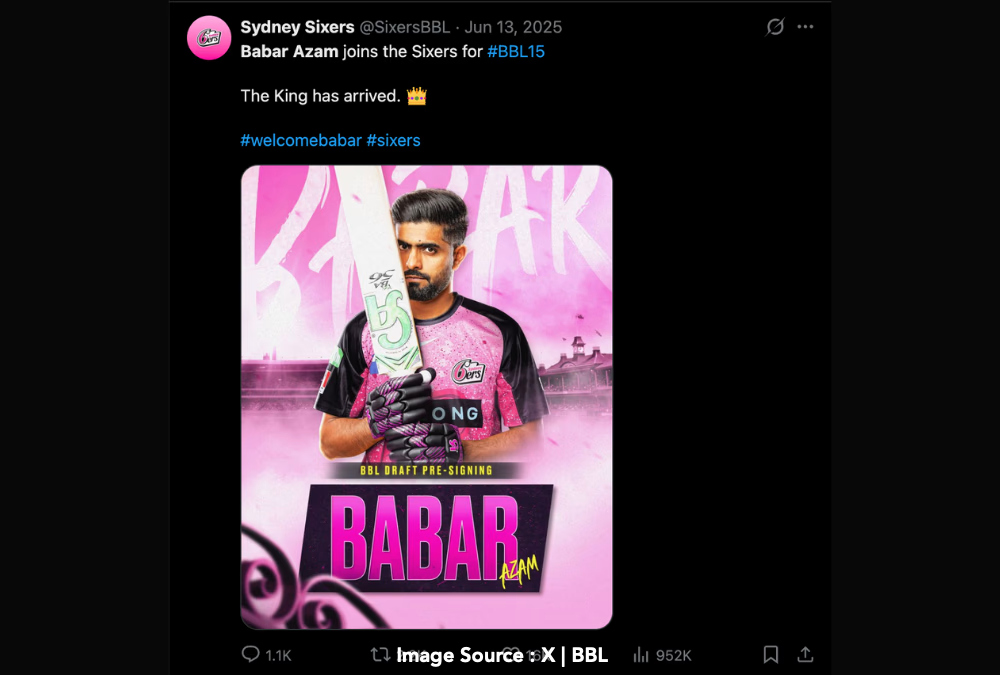
The Babar Azam BBL debate has gathered pace across cricket circles, driven less by numbers and more by a question of format fit. When Babar Azam featured in the Big Bash League 2026 for Sydney Sixers, expectations were instant and uncompromising. A batter of his pedigree was expected to dominate. Instead, his stint with 202 runs with a strike rate of 103.06 in his 11 matches has triggered a wider conversation about what modern franchise T20 leagues truly demand.
What the Big Bash Expects from Batters
The Big Bash League has evolved into a competition that values continuous impact over classical innings-building. Batters are expected to:
- Attack from ball one
- Clear long boundaries regularly
- Score at 150-plus strike rate without extended settling time
- Maintain momentum through the middle overs
In this environment, technique alone is rarely enough. Tempo is king.
Strike Rate Under the Spotlight in the Babar Azam BBL Debate
The Babar Azam BBL discussion often circles back to one key metric — STRIKE RATE! Among the 90 players participating in the Big Bash League 2026, Babar Azam (103.06) and Mohammad Rizwan (102.75) are placed at 88th and 89th position respectively in terms of the strike rate, with their strike rate being higher than only Chris Jordan (101.92). Michael Nesser has the highest strike rate of 225 runs per 100 balls. Below is Babar Azam’s stats for BBL 2026.
| M | Inn | Runs | HS | Avg | 50s | 100s | SR | NO | 4s | 6s | Ct | St | |
|---|---|---|---|---|---|---|---|---|---|---|---|---|---|
| BBL | 11 | 11 | 202 | 58 | 22.44 | 2 | 0 | 103.06 | 2 | 19 | 3 | 7 | 0 |
In a competition like the Big Bash League, scoring speed shapes perception as much as runs themselves. Babar Azam’s approach leaned towards control and low-risk accumulation, which helped him settle but also meant his strike rate did not always keep pace with the league’s high-tempo demands, especially during the middle overs.
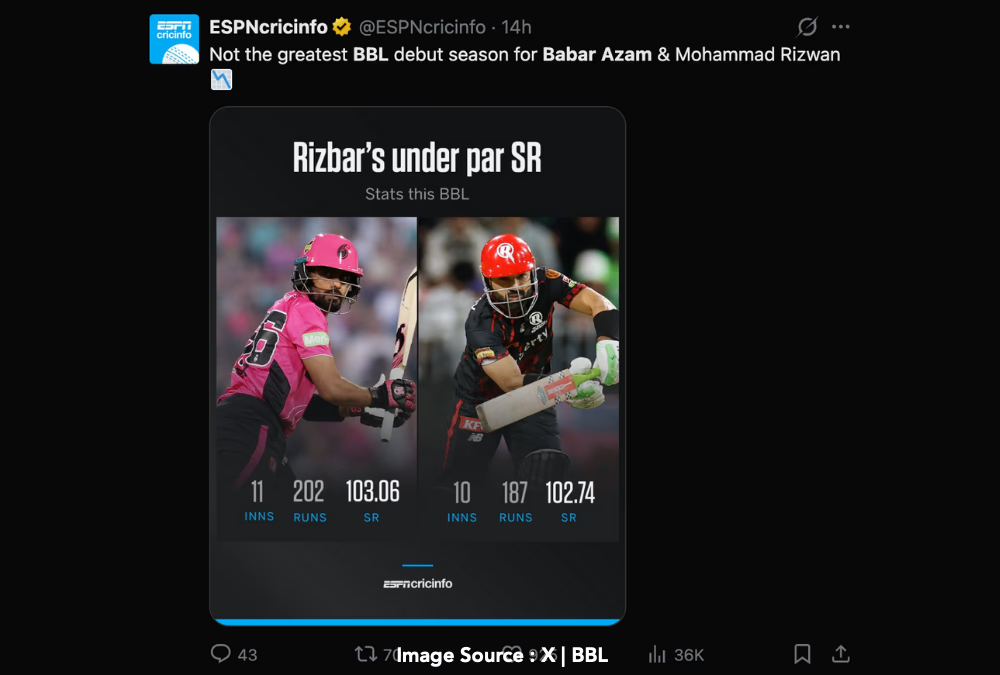
The challenge was less about ability and more about timing. Babar typically found fluency after spending time at the crease, while the BBL increasingly rewards batters who can operate at full throttle from the start. Judging his innings alongside designated power-hitters can be misleading, yet the Babar Azam BBL strike-rate debate underlines the same theme — modern franchise T20s leave little room for gradual acceleration, even for elite technicians.
Where Babar Azam’s Game Fits — and Where It Doesn’t
Technically, Babar Azam looked composed. His balance at the crease, ability to find gaps, and control against pace were evident. On good surfaces, he ensured stability and kept innings intact.
However, the BBL often demands more than stability. Babar’s game is built around control, timing, and low-risk accumulation, while franchise T20 leagues increasingly reward batters who can change matches in a handful of deliveries.
The Middle-Overs Reality Check
The most visible challenge in the Babar Azam BBL discussion came during the middle overs. Against defensive fields and slower bowlers, boundary options were limited. While strike rotation remained strong, the absence of regular fours and sixes meant the run rate often lagged behind the game’s demands.
In a league where even par totals feel chaseable, accumulation without acceleration can quickly appear passive.
In one high-profile BBL outing, a moment between Steve Smith and Babar Azam became a talking point in the Babar Azam BBL debate. With their Sydney Sixers chasing a big total against the Sydney Thunder, Babar appeared to nudge the ball for what looked like an easy single at the end of the 11th over. Smith, batting at the other end, firmly denied the single so he could retain strike going into the crucial Power Surge overs — a tactical phase in the BBL where only two fielders are outside the circle.
"Wasn't happy, Babar." 😳
— KFC Big Bash League (@BBL) January 16, 2026
Drama in the middle of the SCG after Steve Smith knocked back a run from Babar Azam, so he could take strike during the Power Surge. #BBL15 pic.twitter.com/rTh0RXE0A5
In the very next over, Smith capitalised spectacularly, smashing 32 runs — the most expensive over in BBL history — and the decision paid off in scoreboard impact, even as Babar’s reaction became part of the wider discussion on intent and tempo in T20 leagues.
Limitation or Role Mismatch?
Framing this as a limitation oversimplifies the issue. It is better understood as a role mismatch.
Babar Azam thrives when:
- He can set the tempo early
- He has time to build rhythm
- He can pace an innings rather than force it
The Big Bash frequently placed him in scenarios that required immediate acceleration — a role more naturally suited to power hitters.
Is Babar Azam Built for the BBL?
The answer is not a simple yes or no.
Leagues like the Big Bash do not reject batters of Babar Azam’s style, but they do challenge them to adapt. Small tactical shifts — earlier intent against spin, selective risk-taking, and expanding scoring zones — could significantly enhance his impact without dismantling his core strengths.
Babar Azam’s BBL stint was not a verdict on his ability, but a reflection of how narrow the margins have become in modern T20 cricket. As franchise leagues continue to prioritise power and pace, even elite batters are forced to reassess how their games fit evolving expectations.
For Babar Azam, the Babar Azam BBL debate is less about belonging and more about evolution — and history suggests he is capable of learning quickly.



Tags:
Check out latest news:







Learn more about EverythingCric →
