


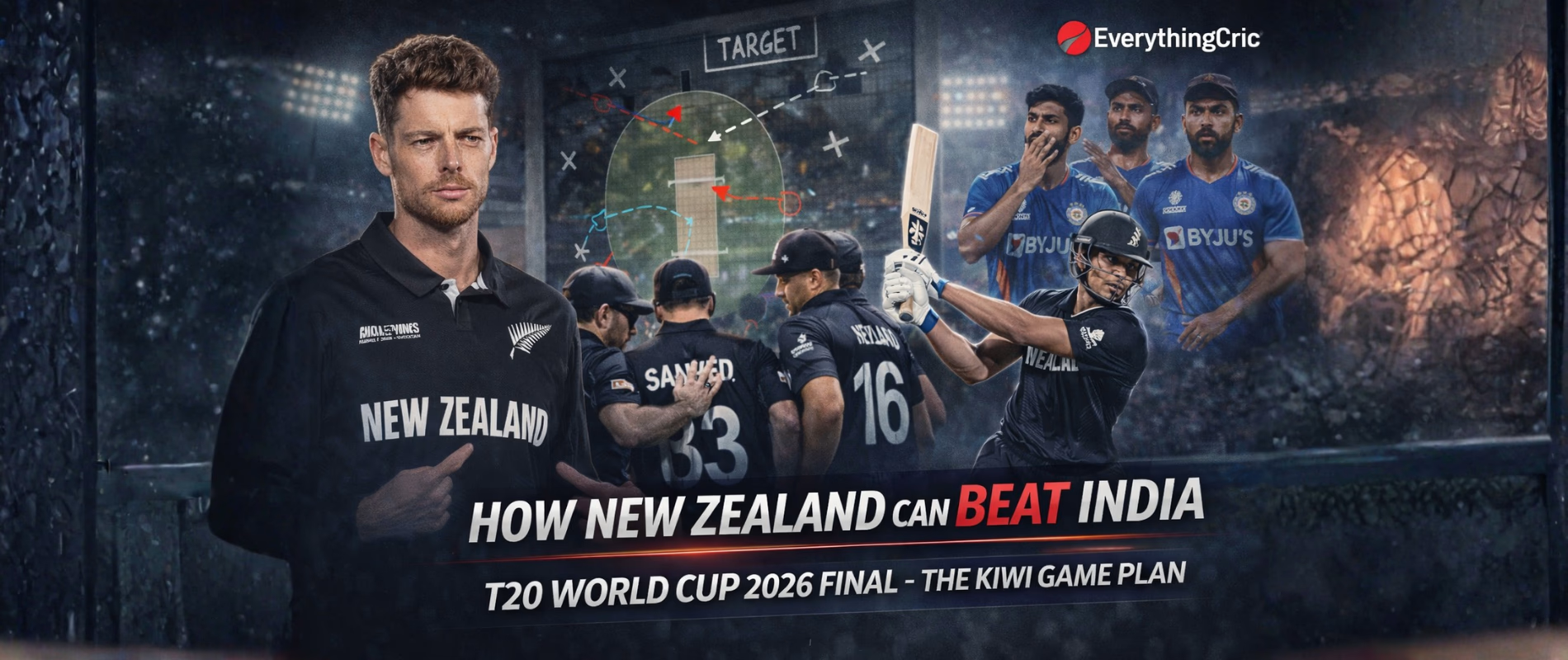
The stadium is bracing for a colossal showdown, and the mind games have officially begun. When asked about New Zealand’s famous “nice guys” tag during the pre-match media interaction, the Kiwi skipper delivered a cold, confident statement about breaking a billion hearts. Ahead of the highly anticipated IND vs NZ T20 World Cup 2026 Final, the narrative is dramatically shifting. New Zealand is tired of merely winning hearts; they desperately want the silverware. If it means silencing the massive home crowd and breaking a billion hearts, Santner is fully prepared to embrace the villain’s role.
I wouldn’t mind breaking a few hearts to lift the trophy for once.” – Mitchell Santner, New Zealand Captain in a Press Conference Ahead to T20 World Cup 2026 Final Against India
The mindset behind breaking a billion hearts
For the past decade, New Zealand has been impeccably consistent, making this their fifth final appearance in an ICC white-ball event in the last 11 years. Yet, the trophy has constantly eluded them. Santner acknowledged that while they aren’t the clear favorites against the hosts, the squad thrives with the underdog label. The ultimate goal is lifting the trophy, and the prospect of breaking a billion hearts is simply viewed as a necessary step to claim that maiden T20 title for the Black Caps.
Key Takeaways from Santner's Press Conference
Pitch Expectations and Match Conditions
- High-Scoring Wicket: Although the pitch was still undercover during the conference, Santner assumes it will be “pretty flat” and “high scoring”.
- Target Adjustment: On a flat surface, Santner noted that the strategy might shift from “rolling” a team over to simply restricting them. He suggested that if India looks set for 250, the goal would be to restrict them to 220 to give the batsmen a chaseable target.
Strategic Focus: The Power Play and Wickets
- Importance of Early Wickets: Santner emphasized that the only way to slow down an aggressive team like India is to take wickets at the top.
- Boundary Control: If wickets don’t come, the focus shifts to “closing overs” and preventing single-digit overs from turning into 15–20 run disasters.
- Batting Balance: For the New Zealand batsmen, the challenge is putting India under pressure for the first six overs without losing wickets, which Santner described as a “pretty tough balance”.
Mentality: Breaking Hearts and Lifting Silverware
- Ending the “Good Guys” Narrative: Addressing New Zealand’s history of being consistent but failing to win silverware, Santner stated he “wouldn’t mind breaking a few hearts to lift the trophy for once”.
- Underdog Advantage: He acknowledged that New Zealand is likely not the favorite but noted the team is comfortable in that position, focusing on “doing their thing” as a unit.
- Handling Pressure: Santner pointed out that India faces added pressure as the home team. He expressed a goal to “silence the crowd” and use that pressure against them.
Analysis of Opponent India
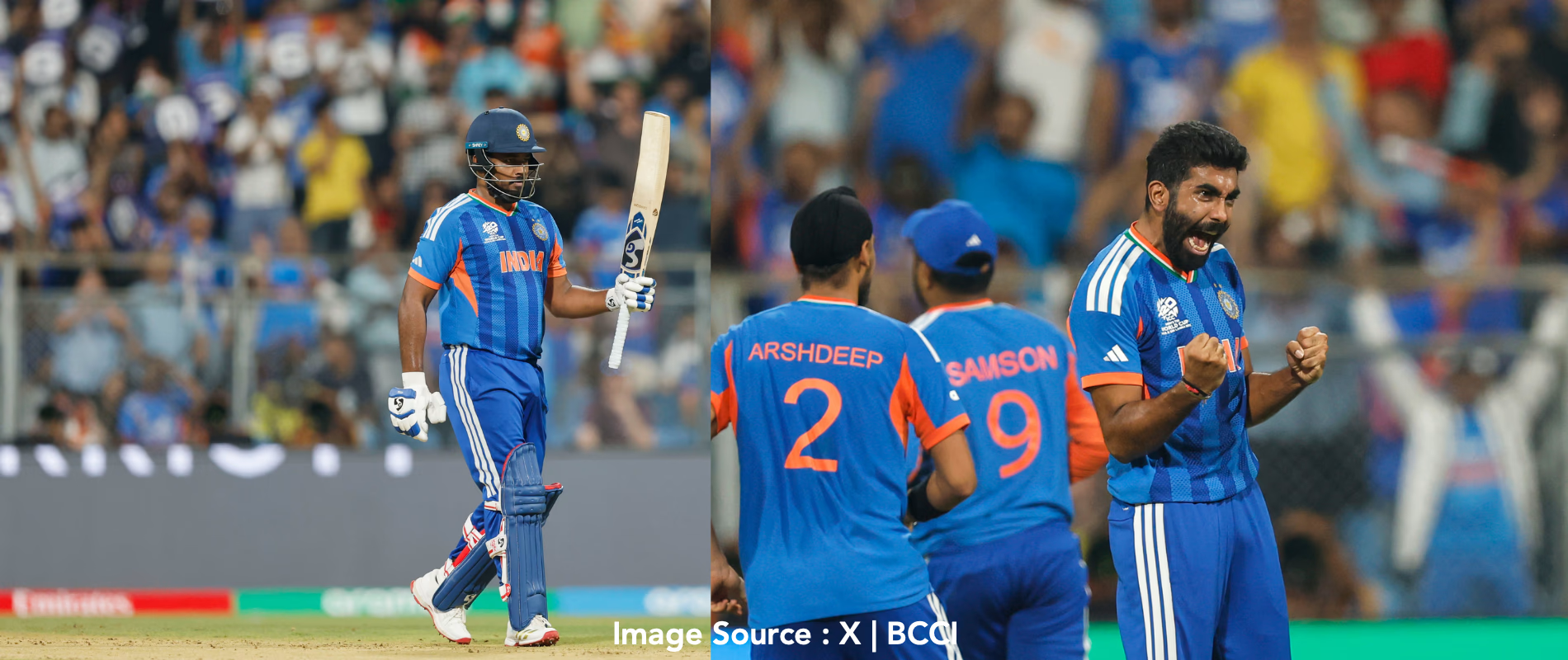
- Jasprit Bumrah as the Game-Changer: Santner identified Bumrah as a “world class” bowler who is the primary threat and “should be in everyone’s conversation”.
- Form Fluctuations: Regarding Varun Chakaravarthy’s recent “form slump,” Santner dismissed it as a psychological advantage, noting that top players are only “one game away from being back in form”.
- Learning from History: New Zealand is leaning on “learnings” from their recent 4-1 bilateral series loss to India, using that experience to refine their planning for the final.
Team Culture and Selection
- Matchup-Based Decisions: Selection choices, such as including “Cole” in the squad, are matchup-based. Santner highlighted a “culture of care” in the team that allows players not in the starting XI to buy into the “bigger picture”.
- Consistent Process: Despite the magnitude of the final, Santner insisted the team’s preparation remains the same as any other game, from video analysis to execution of their processes.
Response to Global Context
- Awareness of West Asia Conflict: Santner acknowledged the “tough situation” regarding escalations in West Asia, noting that some people at the World Cup have been affected, but stated the team is trying to focus on the challenge of the game itself



Related News:



Learn more about EverythingCric →
