


Know your Cricket Commentators : The History & Evolution
When you tune into a Test match, a T20 game or even listen to an audio stream of cricket today, it’s easy to forget how recently this whole business of live commentary developed. The “voice of cricket” or should we say “cricket commentators” didn’t always exist — it evolved alongside radio, then television, then streaming — and some of the earliest commentators set standards, showed the possibilities and sometimes struggled with the technology and conventions of their day.
In this post we’ll trace that evolution: how cricket commentating emerged, the earliest pioneers across England, India and beyond, how the format changed, and how those early voices shaped the medium we now take for granted.
The dawn of live cricket commentary
Cricket as a sport has roots going back centuries, but capturing it for a mass audience came much later. In the early days of radio broadcasting, sports were covered via summaries or “reports” rather than live ball-by-ball description. It was thought that cricket’s slower pace did not lend itself to commentary in the way a football or rugby match might. (Isn’t that surprising!)
In England, the first major radio broadcast of a cricket match in the sense of live coverage can be credited to Frank Gillingham, who on 14 May 1927 was asked, in effect, to leave the pulpit and broadcast live cricket for the BBC.
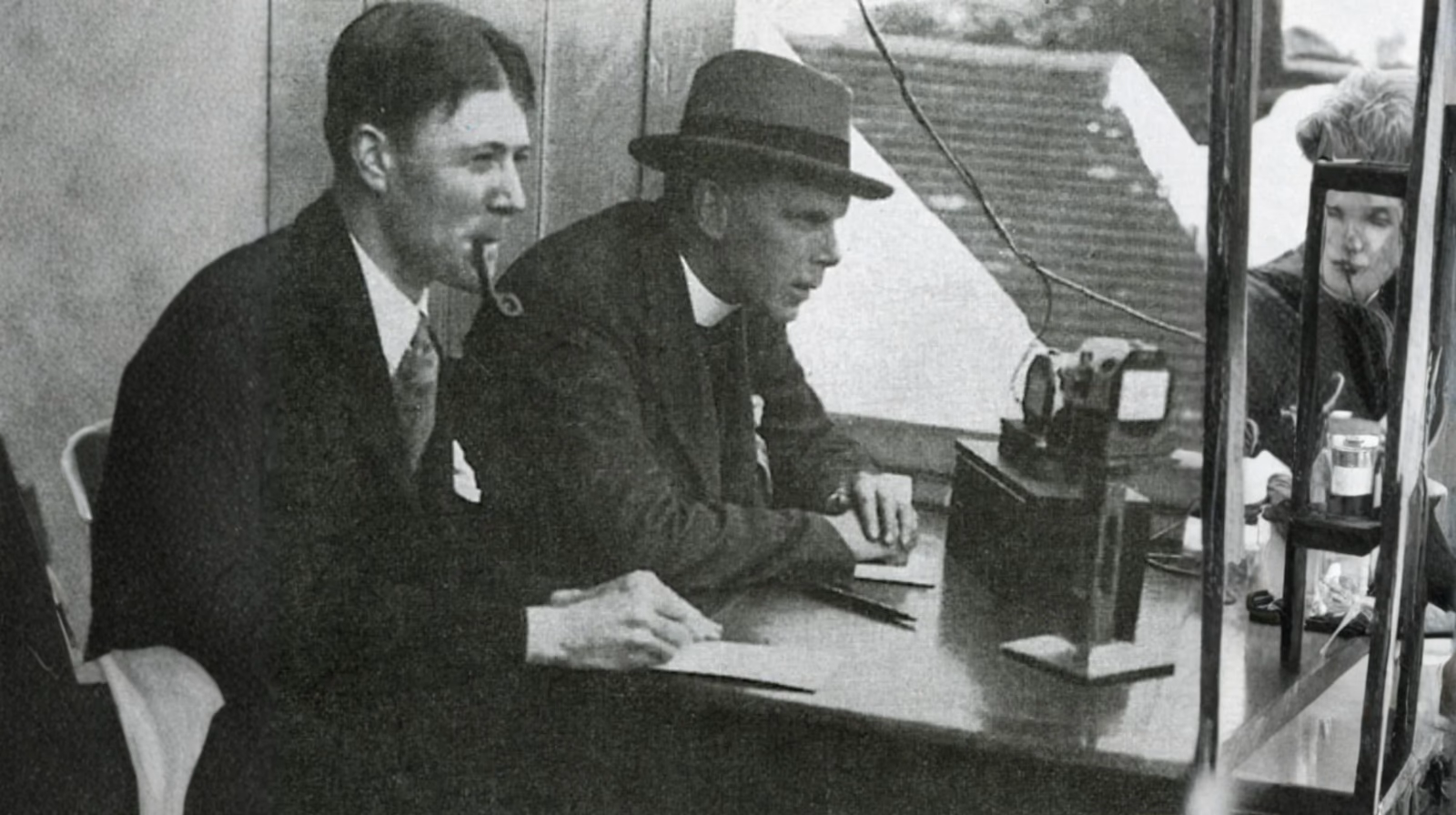
By the late 1930s, cricket had become one of radio’s major sports. A study shows public radio listings found cricket covered for more hours than other sports by the end of the 1930s.
Meanwhile, Australia already had early broadcasts. One account notes that the first-ever broadcast coverage of a cricket match anywhere was in Australia: a testimonial game for Charles Bannerman (1851-1930) at the Sydney Cricket Ground.
Television entered the scene as a further development. For example, the second Ashes Test at Lord’s in 1938 was the first time a Test match was televised.
So the stage was set: as broadcasting technology matured, so did the possibility of bringing the game into homes — and with that, the role of the commentator would become more than just a reporter of facts.
The early commentators and their traits
Let’s highlight several of the early voices, from England and then from other cricketing regions. These people helped pioneer the craft of commentating — painting pictures for listeners, shaping language around the game, and often working without the tools commentators have today.
England / UK
- Howard Marshall: One of the first to move from event-reporting to ball-by-ball cricket commentary for BBC radio in the 1930s. According to sources, around 1934 he began commentating rather than just giving reports. His work was praised for making “every ball bowled … so fertile with meaning that any wireless set may make a subtle cricket student of anybody.”
- E.W. (“Jim”) Swanton: A major figure in post-war commentary. According to a list of commentators his radio career ran from 1938–1956, then into the era of Test Match Special (TMS) from 1957.”
- E.W. (“Jim”) Swanton: A major figure in post-war commentary. According to a list of commentators his radio career ran from 1938–1956, then into the era of Test Match Special (TMS) from 1957.”
Learn more about EverythingCric →
