

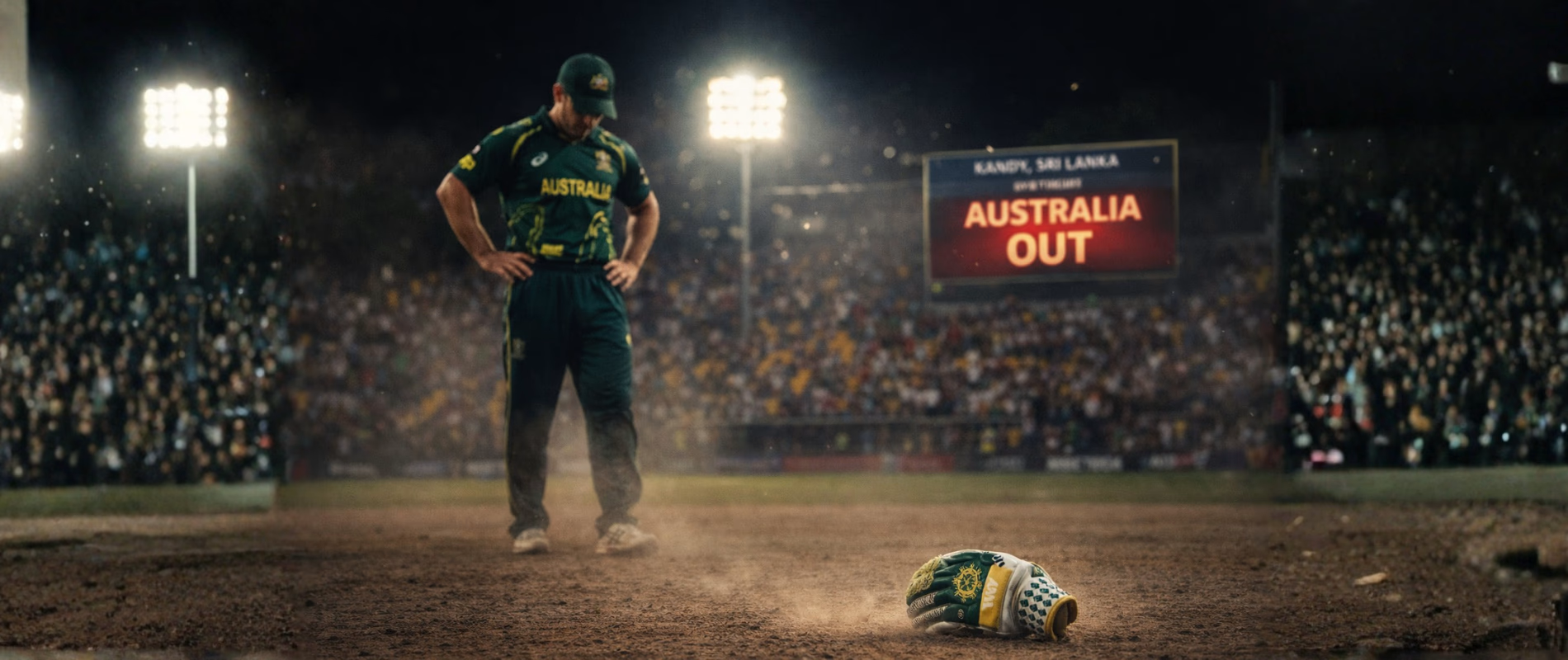
Injuries, baffling selections, and a batting collapse that shocked the cricket world — everything you need to know about the 2021 champions’ earliest exit in 17 years. Explore our Australia 2026 T20 World Cup exit deep-dive.
The Road to the Australia 2026 T20 World Cup Exit
No one saw this coming. Not even the sceptics. Australia, the 2021 T20 World Cup champions, arrived in Sri Lanka as one of the tournament favourites. They left without making the Super 8s — eliminated at the group stage for only the second time in the tournament’s ten-edition history, and for the first time since 2009. In the space of one catastrophic week in Colombo and Pallekele, a perfect storm of injuries, selection blunders, out-of-form players, and a devastating batting collapse dismantled one of world cricket’s most storied sides. This is the full story.
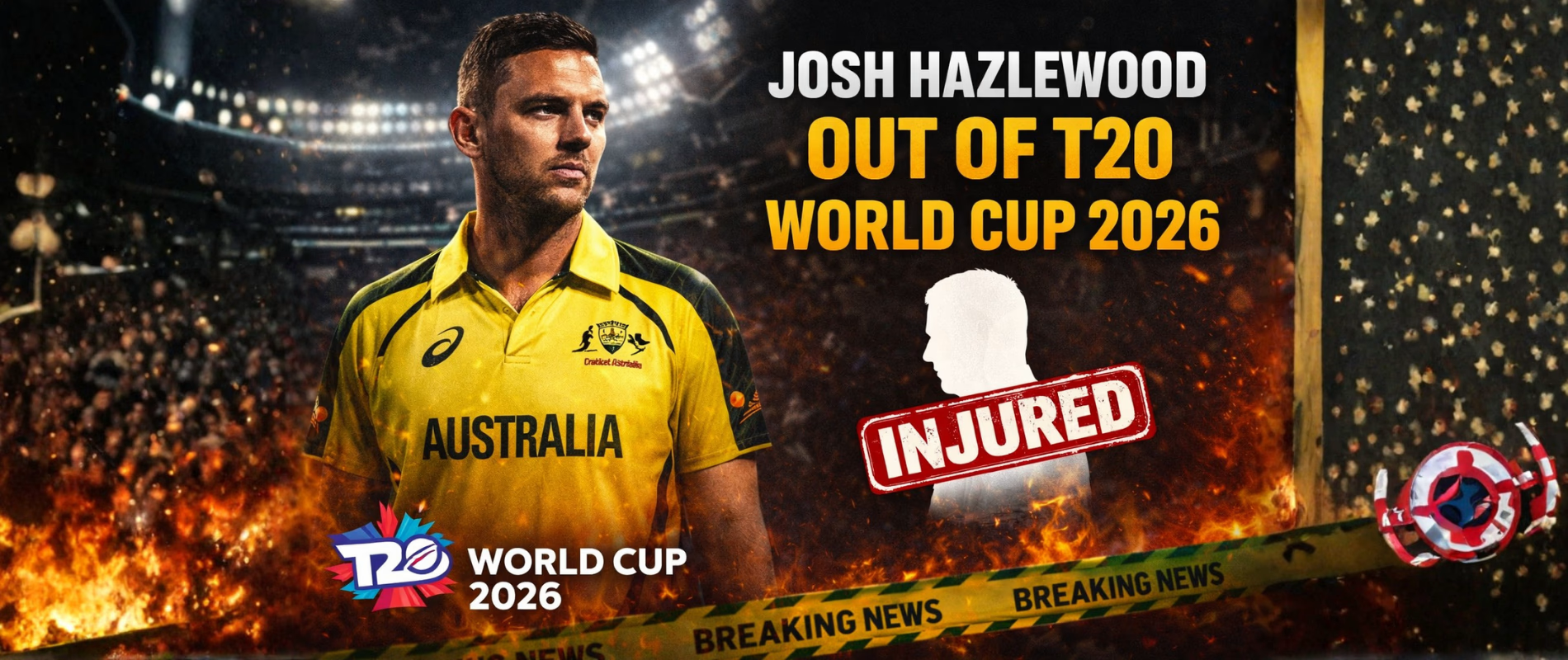
Australia’s downfall did not begin when they walked out at R. Premadasa Stadium against Zimbabwe. The seeds of failure were sown months earlier. Josh Hazlewood’s hamstring injury in November 2025 proved to be the pivotal moment. Up until that point, he had been among the most lethal new-ball bowlers in world T20 cricket — his powerplay numbers were extraordinary, and his last T20I before the injury saw him dismantle India’s top order at the MCG in a spell that left observers speechless. Australia never recovered from that blow.

Then came the cascade: Pat Cummins was ruled out of the tournament entirely with a back injury. Mitchell Starc had already retired from T20 internationals. For the first time in a decade, Australia faced a global T20 tournament without any of their fearsome pace-bowling trio. The bowling attack that would travel to Sri Lanka was a shadow of the one that had terrified batters across the world.
The problems did not stop with the ball. Captain Mitchell Marsh picked up a groin injury in training, ruling him out of Australia’s first two matches. Tim David was managing a hamstring strain. Glenn Maxwell and Cooper Connolly had endured prolonged batting droughts. And in what would become the most fiercely debated decision of the entire campaign, Steve Smith — arguably Australia’s best batsman in any format — was not included in the original squad at all.
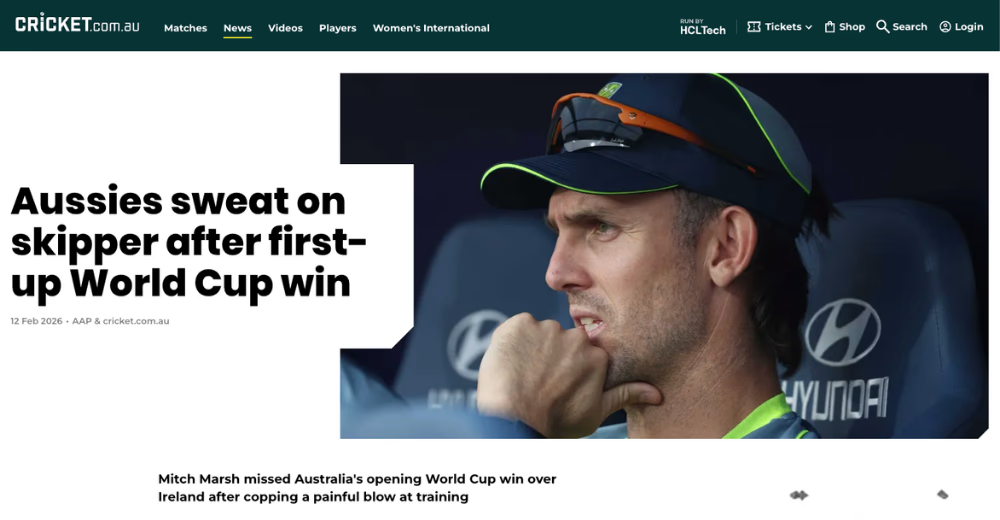
Smith had been in brilliant BBL form, amassing 299 runs across six matches at an average close to 60 and a strike rate north of 165, including a century and two fifties. His excellence against spin — precisely the skill most required on Sri Lankan pitches — made his initial omission all the more confounding. He was eventually added as a travelling reserve, and then officially to the squad as injury cover, yet despite being on tour he would not play a single match during the World Cup.
The Preparatory Crisis: Structural Misalignment and the Pakistan Whitewash
The trajectory of the 2026 failure was established well before the tournament’s commencement in Sri Lanka and India. The preparatory phase was characterized by a fundamental conflict between domestic commercial interests and international competitive readiness. A primary factor in the team’s lack of cohesion was the scheduling overlap with the domestic Big Bash League (BBL), which resulted in several key members of the national squad arriving in the subcontinent only days before the tournament began. This staggered arrival prevented the formation of a unified tactical approach and left the squad under-acclimatised to the specific atmospheric and surface conditions of the region.
This lack of readiness was ruthlessly exposed during a three-match preparatory series against Pakistan in January and February 2026. Opting to “protect” senior stars and manage workloads, the national selection panel—comprised of George Bailey, Andrew McDonald, and Tony Dodemaide—fielded a depleted side that was comprehensively outplayed in Lahore. The results of this series provided a harrowing preview of the technical vulnerabilities that would haunt the team during the World Cup.
PAK vs AUS T20I Series 2026: Match-by-Match Breakdown
| Match | Winner | Margin | Top Performer | Key Stats |
|---|---|---|---|---|
| 1st T20I (Jan 29) | Pakistan | 22 Runs | Saim Ayub | 39 (27) & 2/29 |
| 2nd T20I (Jan 31) | Pakistan | 90 Runs | Salman Ali Agha | 76 (40) |
| 3rd T20I (Feb 1) | Pakistan | 111 Runs | Mohammad Nawaz | 5/18 (4 overs) |
Series Result: Pakistan won 3-0.
Salman Ali Agha was named Player of the Series for his 120 total runs.
The third T20I in Lahore was particularly damaging to the team’s psychological state. Chasing a target of 208, the Australian batting order was dismantled by Mohammad Nawaz, who returned figures of 5 for 18. The inability of the middle order to navigate Nawaz’s left-arm spin was a harbinger of the collapse that would later occur against Sri Lanka. Despite these warning signs, head coach Andrew McDonald dismissed concerns regarding the team’s prioritization of the format, labeling suggestions that Australia does not care about T20 World Cups as “entirely false”. However, the 3-0 whitewash established a narrative of decline that the squad proved unable to reverse.
The Captaincy and Leadership Vacuum
Leadership stability, a hallmark of successful Australian campaigns, was notably absent in 2026. The appointment of Mitchell Marsh as captain was compromised when he suffered a freakish and painful testicular injury during a training session, forcing him to miss the first two matches against Ireland and Zimbabwe. This necessitated a last-minute elevation of Travis Head to the captaincy.
While Head is a respected member of the leadership group, the sudden transition—combined with his own form struggles—contributed to a sense of tactical drift during the loss to Zimbabwe. Marsh’s eventual return for the Sri Lanka match did not yield the desired effect, as the team appeared to lack a coherent plan when Pathum Nissanka launched his match-winning assault. The “devastated” nature of the group, as described by Coach McDonald, suggested that the emotional and tactical toll of the leadership shuffling had been significant.
The Selection Paradox: The Steve Smith Saga and Role Rigidity
The rigid selection philosophy regarding Steve Smith was a major catalyst for the Australia 2026 T20 World Cup Exit, as it left the middle order vulnerable to spin. The most contentious aspect of the 2026 campaign remains the management of Steve Smith. The initial decision by the selection panel to omit Smith from both the World Cup squad and the preceding Pakistan tour ignited a firestorm of criticism. Despite Smith’s “breathtaking” form in the BBL—where he looked “a class above” everyone else and was “scoring runs for fun”—selectors George Bailey and Andrew McDonald argued that Smith was exclusively a “specialist opener” in their tactical framework
Rigid Philosophy vs. Practical Utility: Bailey’s justification centered on the belief that with Travis Head and Mitchell Marsh occupying the top two spots, there was no role for Smith in the middle order. This “rigid thinking” was widely condemned by former greats, including Mark Waugh and Darren Lehmann, who argued that Smith’s “broad skillset,” exceptional fielding, and renowned expertise against spin made him an essential inclusion for a tournament played on turning subcontinental tracks.
Match by Match: Where the Tournament Unravelled
Game 1 vs Ireland — A False Dawn
Australia opened their campaign with a comprehensive 67-run win over Ireland, a result that papered over the cracks and led many observers to breathe a sigh of relief. Marsh was absent, Travis Head shouldered the batting load, and the bowling looked manageable against the Irish. For a brief moment, the injuries seemed surmountable. They were not.
Game 2 vs Zimbabwe — The Moment Everything Fell Apart
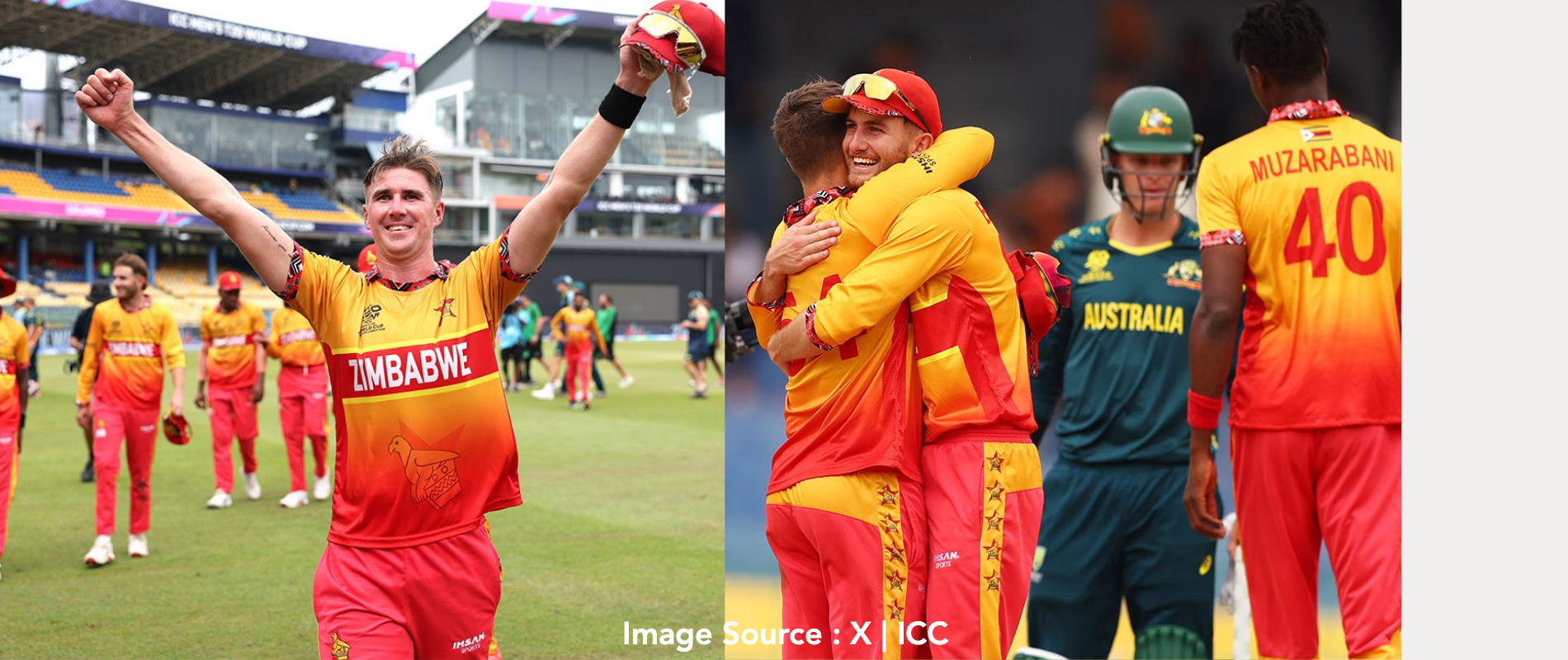
The match that would define Australia’s tournament came at R. Premadasa Stadium in Colombo. Zimbabwe, a side that had not even qualified for the 2024 edition, posted 169/2 and then bowled Australia out for 146 in 19.3 overs — 23 runs short. The batting crumbled against a Zimbabwean attack that was disciplined and relentless. It was, in Ricky Ponting’s words, “the game they’ll think back on and say that’s where the World Cup went.” Tony Munyonga’s stunning catch to dismiss Ben Dwarshuis became the defining image of Australia’s humiliation.
Australia Matches - ICC T20 World Cup 2026
Game 3 vs Sri Lanka — Nissanka's Masterclass Ends It
In a must-win contest at Pallekele, Australia looked like a different side for the first nine overs. Marsh and Head were brutal, putting on 104 for the opening wicket in just 8.3 overs at over 12 an over. The full house was stunned. But then Australia’s middle order — out of form going in, still out of form on the day — imploded. Inglis, Green, and Maxwell contributed little as Australia scraped to 181 all out. Head’s 56, his first T20I fifty in 13 innings, came too late.
What followed was one of the great T20 individual performances of the year. Pathum Nissanka dismantled Australia’s shorthanded and inexperienced bowling attack, racing to a century off just 52 balls — only the second T20I hundred of his career, and the highest successful chase in Sri Lanka’s T20I history at home. Sri Lanka cruised home by eight wickets with two overs to spare. Nissanka also took a sensational leaping catch to remove Maxwell, and his all-round contribution effectively ended Australia’s campaign.
Elimination — Rain Delivers the Final Blow
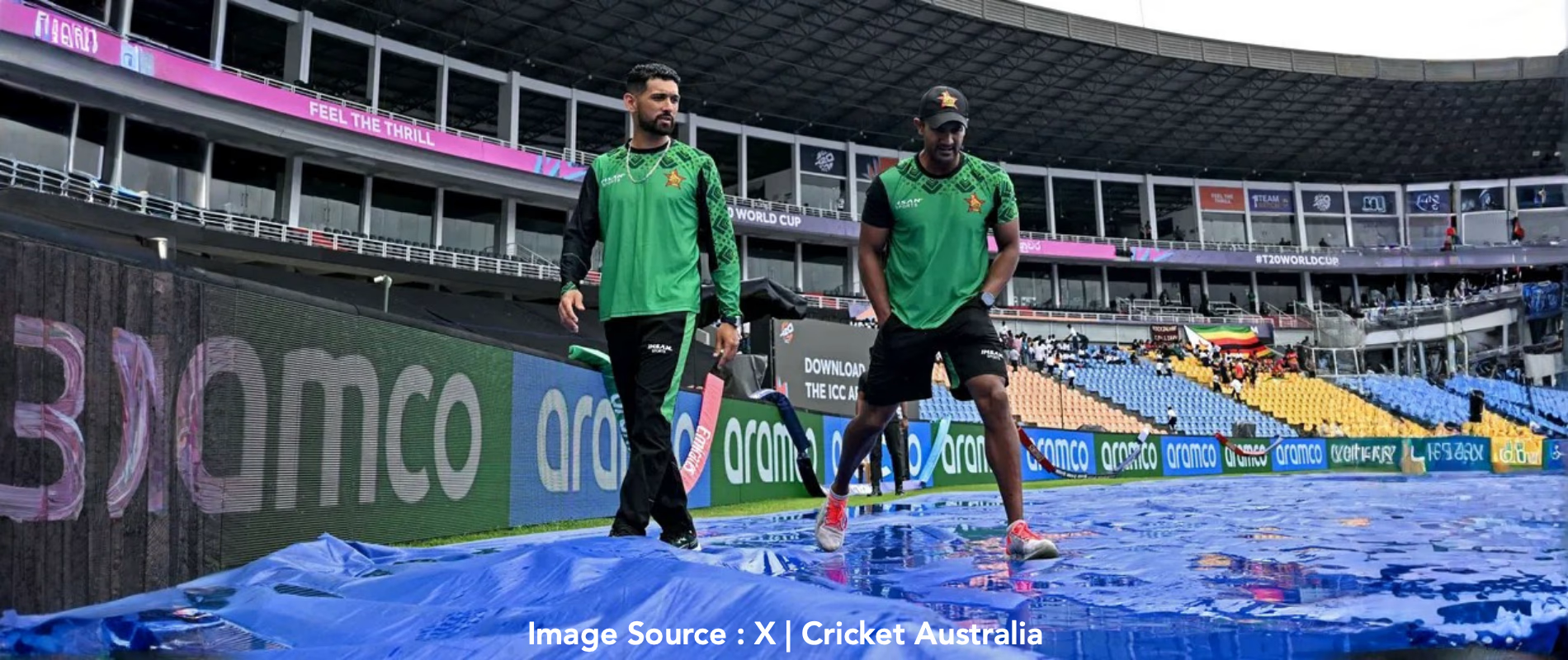
Australia’s fate was sealed not by another defeat but by rain. The Group B fixture between Zimbabwe and Ireland was abandoned without a ball being bowled. Zimbabwe collected a point, taking them to five — a total Australia could no longer surpass. For the first time since 2009, the Baggy Greens were going home from the group stage. Zimbabwe, the team that had failed to qualify in 2024 altogether, would take Australia’s pre-seeded Super 8 slot. While the weather played its part, the Australia 2026 T20 World Cup exit was ultimately a result of poor performances against Zimbabwe and Sri Lanka.
Game 4 vs Oman — A Hollow Win
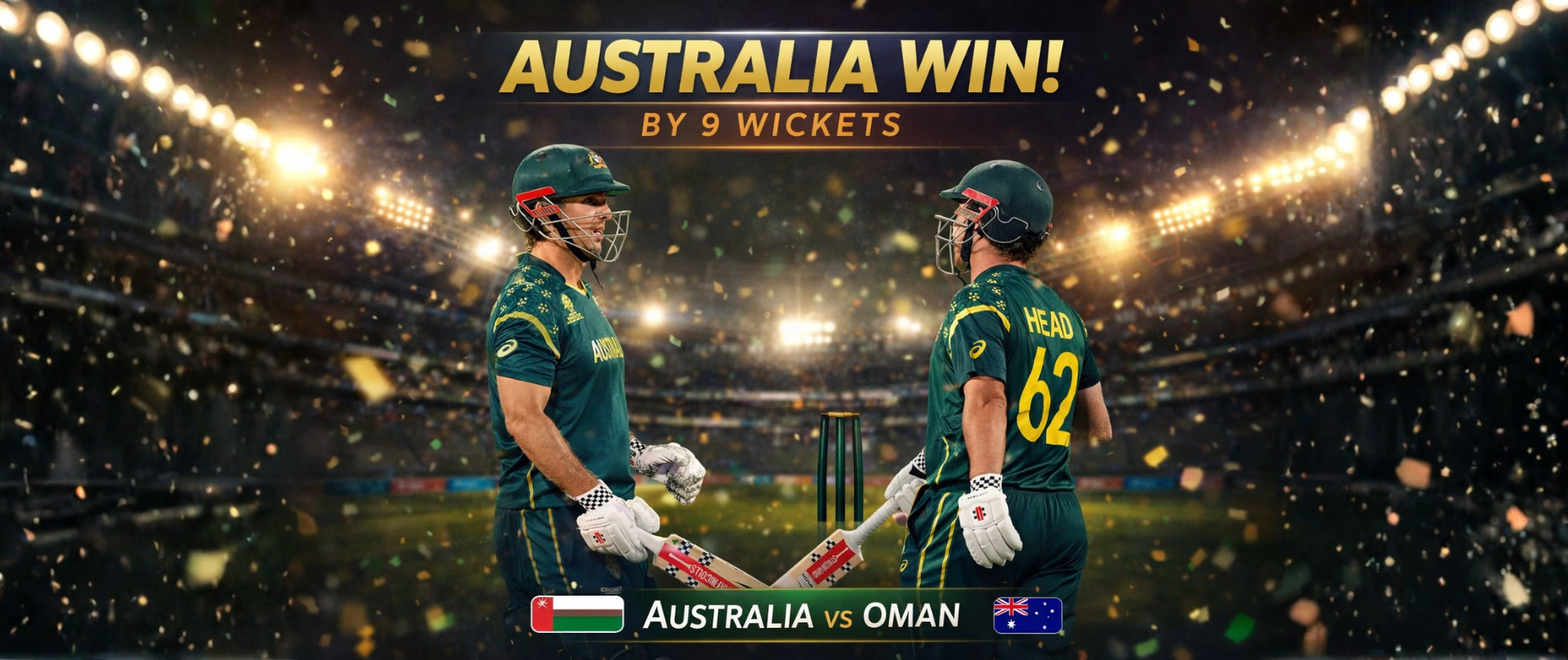
Australia’s final act was a nine-wicket demolition of Oman. Adam Zampa returned to form with 4 for 21. But there was no celebration. Mitchell Marsh said at the toss:
“We certainly respect the noise from back home. We knew that was coming.”
What Went Wrong: A Forensic Breakdown
Bowling Toothlessness
In the absence of the “Big Three,” the Australian bowling unit appeared “a shadow of former glories”. The inability to take early wickets in Sri Lanka was fatal; after an early dismissal of Kusal Perera, Nissanka and Mendis added 97 runs for the second wicket without serious challenge. The lack of a left-arm pace option, a role Mitchell Starc had mastered, left the attack one-dimensional. Spencer Johnson, the intended replacement, was unable to return from a back injury in time, further depleting the team’s tactical variety.
The Batting Collapse
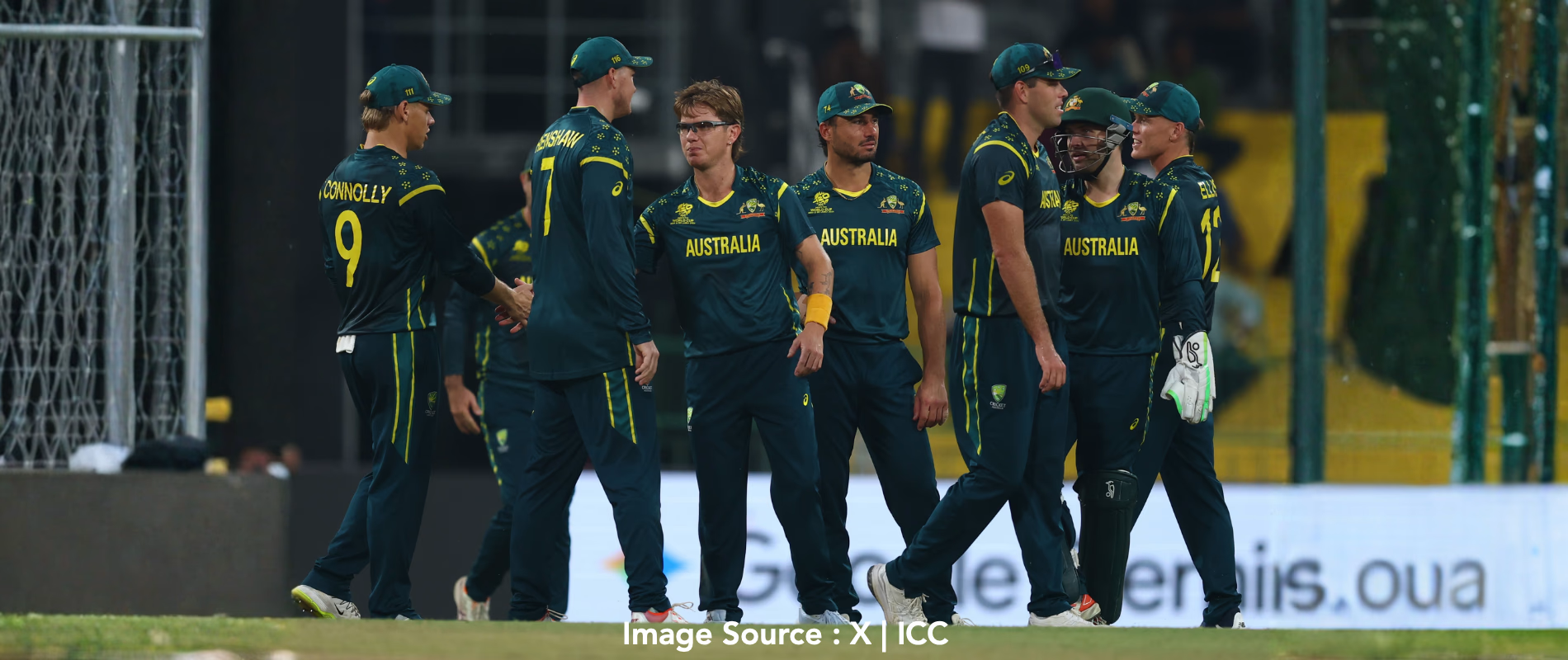
Australia were bowled out in both defeats — a damning indictment of their middle and lower order. Inglis, Green, and Maxwell had produced virtually nothing of note in recent T20Is going into the tournament, and all three misfired again. Cameron Green was not even trusted to bowl against Sri Lanka. Maxwell, whose all-round value had been central to Australia’s T20 plans, had gone wicketless in his last six T20Is before the tournament. Travis Head’s Ashes brilliance had concealed a run of wretched T20I form — the Sri Lanka fifty was his first T20I score above 31 in 13 innings.
The Spin Mismanagement
The misuse of spinners was cited as a major tactical error. Supporting Adam Zampa with part-time options like the struggling Cooper Connolly, rather than a specialist left-arm spinner like Matt Kuhnemann, proved costly. Kuhnemann’s expertise in subcontinental conditions, demonstrated in past tours, was “badly missed” as Australia’s bowlers were “punished” by the Zimbabwe and Sri Lanka batters.
The Selection Shambles
The decision that dominated post-tournament conversation was the handling of Steve Smith. Not selected in the original squad. Not added when the injuries mounted. Eventually added, but not played. Not even given a farewell appearance against Oman. The selectors appeared to have a fixed “Plan A” built around power-hitting and stuck to it with blind faith even as evidence of its failure accumulated. Matt Renshaw, ironically, was Australia’s best batsman across the first two matches, but was dropped for the must-win game against Sri Lanka to accommodate the returning Marsh — a decision that drew considerable criticism.
The Ashes Hangover
Australia’s ICC campaigns have a recurring structural problem: the Ashes. Five gruelling Test matches are physically and mentally draining, and the T20 World Cup follows shortly after. The squad only assembled in Sri Lanka just over a week before their first game — minimal time to adapt to subcontinental conditions. A run of five straight T20I losses against India and Pakistan before the tournament was a warning sign that went unheeded.
The Administrative Fallout: The "Forensic Review" and Management Response
The premature exit, confirmed after Zimbabwe’s match against Ireland was washed out, has triggered a “forensic review” by Cricket Australia. 1 Selector Tony Dodemaide has emphasized that the review will be comprehensive and conducted only once the team has returned home to “cut out the emotion”.
Head Coach Andrew McDonald’s Defense
Head coach Andrew McDonald has pushed back against claims that the T20 format is not prioritized, stating that the team had been “fully locked in” to the tournament for an extended period. McDonald attributed the exit to a rare occurrence of multiple players failing to perform simultaneously and acknowledged that while the absent “Big Three” bowlers would have made a difference, the players present were “good enough” but failed to execute.
Ricky Ponting’s Assessment
Former captain Ricky Ponting has been more critical, describing the campaign as “really poor” and pointing to the Zimbabwe loss as the moment the World Cup was lost. Ponting has predicted major squad changes ahead of the 2028 World Cup, which Australia will co-host, suggesting that the “last dance” for many of the golden generation has concluded in failure.
Future Outlook: Olympic Qualification and 2028 Rebuilding
The 2026 failure has created significant administrative headaches regarding the 2028 Los Angeles Olympics. Qualification for the Games—where cricket will make its debut—is largely dependent on T20I rankings as of the conclusion of the 2026 World Cup. Australia’s ranking slide has placed their automatic qualification for the Oceania spot in danger, as New Zealand (ranked 4th) could theoretically overtake them if they reach the later stages of the ongoing tournament.
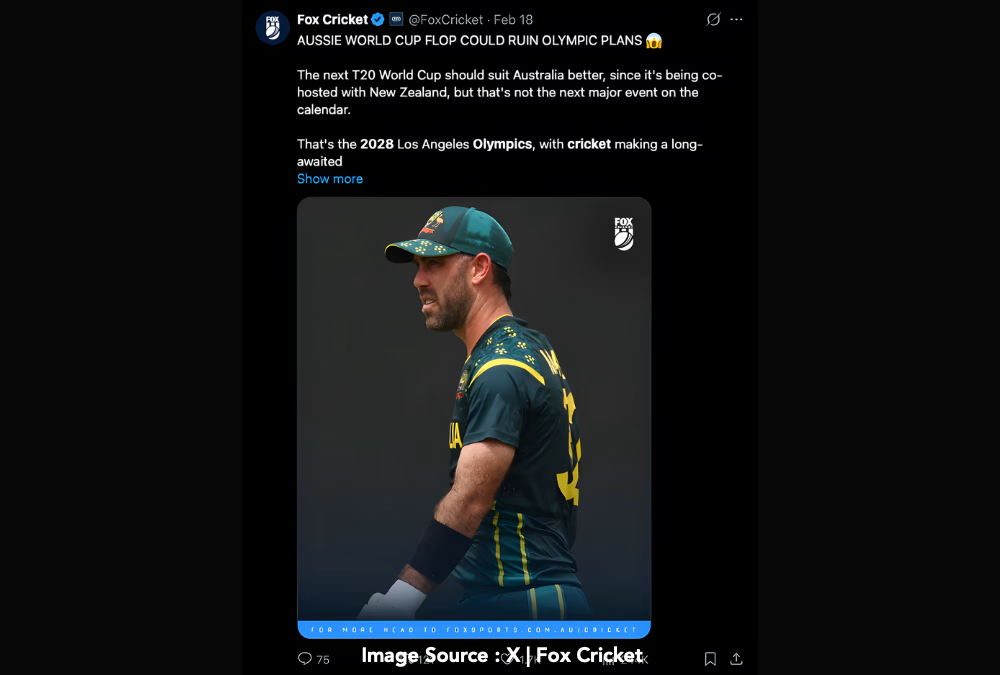
The David Kendix Weighted Ranking System: According to the weighted ranking system, team ratings are calculated by dividing total points earned by matches played, with matches from the last two years carrying full weight. While Australia currently holds 258 points to New Zealand’s 250, the gap is closing. Should Australia lose their final match to Oman and New Zealand win the tournament, the “Trans-Tasman rivals” would be separated by a razor-thin margin, potentially forcing Australia into a qualification tournament.
What Next for Australian Cricket?
The immediate question is whether this catastrophic exit triggers a meaningful reset. The stakes are enormous: Australia co-host the 2028 T20 World Cup with New Zealand, and cricket returns to the Olympics in Los Angeles in 2028. Australia’s early exit has put their Olympic qualification pathway in doubt, though it is not irredeemably damaged.
The likely survivors of any selection reset: Marsh, Head, and Inglis figure prominently. Bartlett and Ellis could develop into the powerplay bowlers of the future. Connolly is young enough to rebuild. But the era of Maxwell, and likely Stoinis, appears to be drawing to a close. Steve Smith has voiced his desire to play at the Olympics — whether the selectors agree remains to be seen.
The deeper structural question is one Australia has avoided answering for years: in a world where other nations are increasingly prioritising T20 cricket, can Australia continue to subordinate the format to the Ashes and Test cricket without paying an ever-steeper price? The answer, as of February 2026, is no longer theoretical. They have paid it.
The Aging Squad Profile
The 2028 T20 World Cup, to be co-hosted by Australia and New Zealand, will require a drastically different personnel profile. Only three players in the current squad—Green, Bartlett, and Connolly—will be under the age of 30 by 2028. The remainder of the core unit, including Marsh, Hazlewood, Stoinis, Smith, Maxwell, and Zampa, will be past their 36th birthdays.
Projected Ages of Key Australian Personnel for 2028 T20 World Cup
| Player | Projected Age in 2028 |
|---|---|
| Mitchell Marsh | 36+ |
| Josh Hazlewood | 36+ |
| Marcus Stoinis | 36+ |
| Steve Smith | 36+ |
| Glenn Maxwell | 36+ |
| Adam Zampa | 36+ |
| Pat Cummins | 35 |
| Travis Head | 34 |
| Tim David | 34 |
| Nathan Ellis | 34 |
Note: "36+" denotes players who will have passed their 36th birthday by the tournament start date.
The transition from the “Big Three” to the “Next Generation” is no longer a theoretical exercise but a matter of administrative urgency. The “scorched earth” policy suggested by some analysts may be the only way to rejuvenate a T20 program that has now failed to reach the semi-finals in three consecutive global tournaments.
Key Facts at a Glance: Australia’s group stage exit is only the second in ten T20 World Cup editions (also 2009). Results: beat Ireland by 67 runs, lost to Zimbabwe by 23 runs, lost to Sri Lanka by 8 wickets, beat Oman by 9 wickets. Key absences: Cummins (back), Hazlewood (hamstring), Starc (retired). Steve Smith travelled to Sri Lanka, was added to the squad, and did not play a single game. Zimbabwe inherited Australia’s pre-seeded Super 8 slot. Australia have failed to reach the knockouts in five of the past six T20 World Cups.
Conclusion: Synthesizing the Australia 2026 T20 World Cup Exit
The 2026 T20 World Cup campaign represents the lowest point for Australian men’s cricket in the shortest format since 2009. The “shambolic” nature of the exit was the result of a systemic failure to balance domestic priorities with the specialized demands of an international tournament in the subcontinent. The injury crisis that decimated the pace attack exposed a lack of depth in the bowling reserves, while a rigid selection philosophy regarding Steve Smith and Matthew Renshaw stripped the team of its best technical options against spin.
Ultimately, the “lap of the Gods” that Mitchell Marsh referred to after the Sri Lanka defeat proved unkind. The washout of the Zimbabwe-Ireland match in Pallekele was the final, ironic stroke of misfortune for a campaign that was “doomed from the get-go”. As the “forensic review” begins, the focus must shift from the tactical errors of individual matches to the structural misalignments that allowed such a failure to occur. The path to the 2028 home World Cup and the 2028 Olympics must be built on the lessons of 2026: that in T20 cricket, reputation is a poor substitute for preparation, adaptability, and clinical execution under pressure.



Related news:
Latest Cricket News:




Learn more about EverythingCric →
