

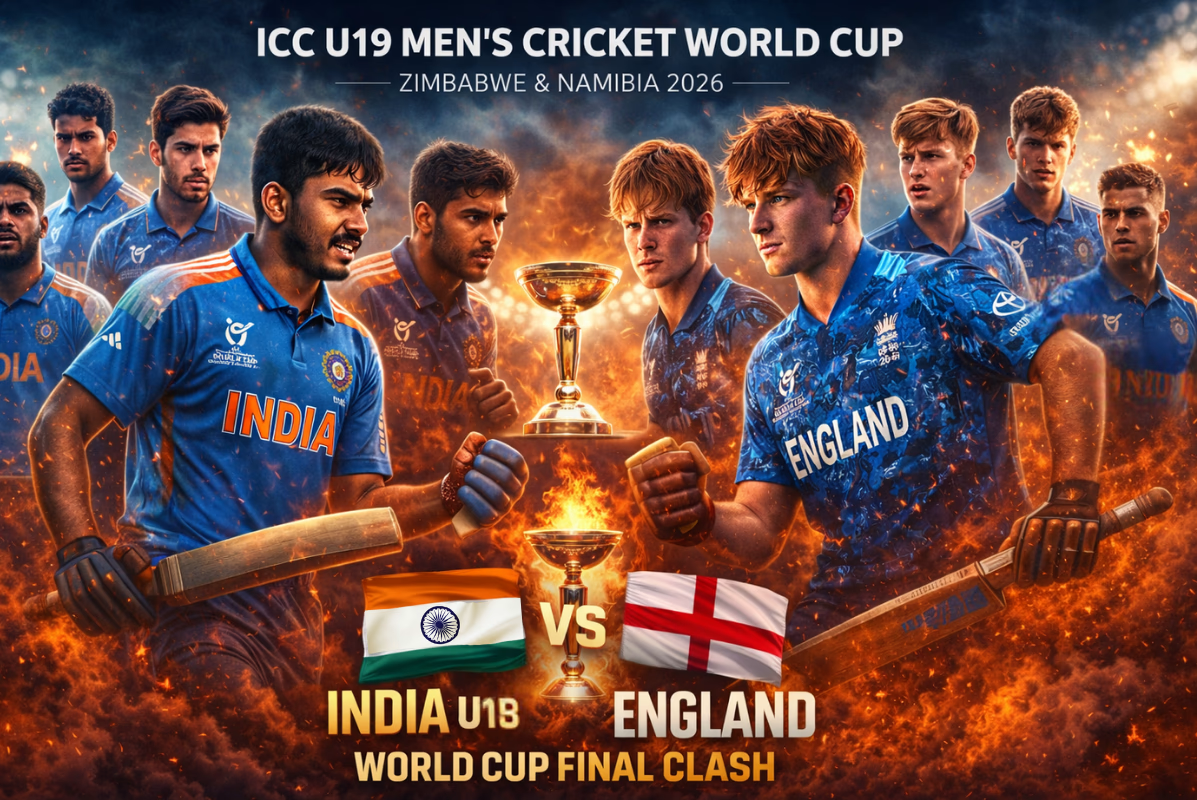
The Harare Clash: IND vs ENG U19 World Cup 2026 Final playing 11 & Tactical Preview
Forget the stats for a second; the IND vs ENG U19 World Cup 2026 Final playing 11 reveals a fascinating clash of cultural cricketing identities. While England has embraced a high-risk, high-reward blueprint, India remains the “Gold Standard” of calculated aggression. With the final now underway in Zimbabwe, we aren’t just watching a game; we’re watching the next generation of global superstars define their legacy.
The Team Sheets: Playing XI
The personnel choices today tell the story of two different philosophies. England has backed their pace battery, while India has doubled down on their “spin-choke” strategy.
India U19 XI
Aaron George, Vaibhav Sooryavanshi, Ayush Mhatre(c), Vihaan Malhotra, Vedant Trivedi, Abhigyan Kundu(w), RS Ambrish, Kanishk Chouhan, Khilan Patel, Henil Patel, Deepesh Devendran
England U19 XI
Ben Dawkins, Joseph Moores, Ben Mayes, Thomas Rew(w/c), Caleb Falconer, Ralphie Albert, Farhan Ahmed, Sebastian Morgan, James Minto, Manny Lumsden, Alex Green
The Powerplay Psychology: Where the Battle Begins
Once those names step onto the grass, the narrative shifts to the first 10 overs. This match will be won or lost in the Powerplay because of the Lumsden Variable. Manny Lumsden’s high release point on a bouncy Harare deck is designed to rattle India’s openers. However, he faces the Suryavanshi Psychology—at 14, Vaibhav is playing with “house money” and no fear, a mental edge that makes him the tactical highlight of the afternoon.
Tactical Battle: The "Trio of Patels" vs. England’s Sweepers
If India survives the initial burst, the story enters its most technical phase. India’s strategy centers on the “Middle-Over Squeeze” led by Henil Patel, Khilan Patel, and RS Ambrish. They don’t just bowl dots; they bait England’s sweepers into risky shots. This is where Ben Mayes (The Anchor) becomes vital for England; his ability to bat 100+ balls is the only thing that can stop England’s “Bazball” approach from turning into a collapse under the heat of India’s spin trap.
The Final Act: Chasing the Ghost of 311
As we head toward the finish line, the “Hidden Star” Aaron George takes center stage. While others provide the fireworks, George is the stabilizer. His role is critical because India is currently chasing the psychological “Ghost of 311″—their record-breaking semifinal chase that proved no total England sets is truly safe.
Players You Need to Track
Vaibhav Suryavanshi (The Mini-Blaster): The 14-year-old sensation has defied his critics with a staggering tournament strike rate and a fearless approach that anchored India’s record-breaking semifinal chase.
Ayush Mhatre (The General): While others provide the fireworks, Mhatre’s captaincy and middle-over strike rotation are the glue. If India is chasing 280+, Mhatre is the one who will determine the tempo.
Ben Mayes (The Anchor): England’s batting revolves around Mayes’ ability to play 100+ balls. If he falls before the 30th over, England’s “Bazball” approach could lead to a collapse.
Khilan Patel (The X-Factor): Often ignored in the media, Patel’s ability to chip in with “junk” wickets and hit long balls at No. 8 makes India’s tail one of the most dangerous in youth cricket.
Record Alert: A Sixth Crown or a 28-Year Wait?
Ultimately, this narrative ends in the record books. India is hunting a record 6th title to solidify their status as a global talent factory. For England, it’s about breaking a cycle of dominance and ending a 28-year drought. This isn’t just a rematch of 2022; it’s a battle to see whose philosophy—India’s clinical precision or England’s fearless resurgence—will define the next era of cricket.
Head-to-Head: The Revenge Narrative
England hasn’t won this title since 1998, and their last final appearance in 2022 ended in a 4-wicket loss to—you guessed it—India. For England’s captain Thomas Rew, this isn’t just a trophy; it’s about breaking a cycle of Indian dominance that has seen them lose 41 out of 55 youth ODIs against the Men in Blue.
Key Stats to Consider
Boundary Efficiency: India hits a boundary every 5.4 balls in this tournament, the highest efficiency rate since 2018.
Dot Ball Percentage: England’s bowlers have a 52% dot-ball rate, the best in the 2026 edition.
The 14-Year-Old Giant: Suryavanshi’s 15 sixes are already a tournament record for an Indian U19 player.
The "Hidden" Star: Aaron George’s Anchor Role
While Vaibhav Suryavanshi gets the “prodigy” headlines at 14, Aaron George is the tactical heartbeat of the team.
Why he matters: In the semifinal, while Suryavanshi was providing the fireworks (68 off 33), George played the “stabilizer” role with a century (115).
The England Plan: England’s Manny Lumsden (15 wickets) will likely target George with short-pitched deliveries early to force a hurried pull shot, hoping to break the partnership before the spinners come on.
Harare Pitch Intelligence: The "1:30 PM Shift"
The Harare Sports Club is unique because of the way the Zimbabwean sun interacts with the outfield.
The Outfield Factor: The outfield is historically slow. This means that “working the gaps” is more valuable than trying to clear the ropes.
The Advantage: This favors India’s running between the wickets. In the Super Sixes, India took 14 more “twos” than any other team, a fitness advantage that usually shows up in the final 10 overs of a long afternoon.



Check out related news:





Learn more about EverythingCric →
