

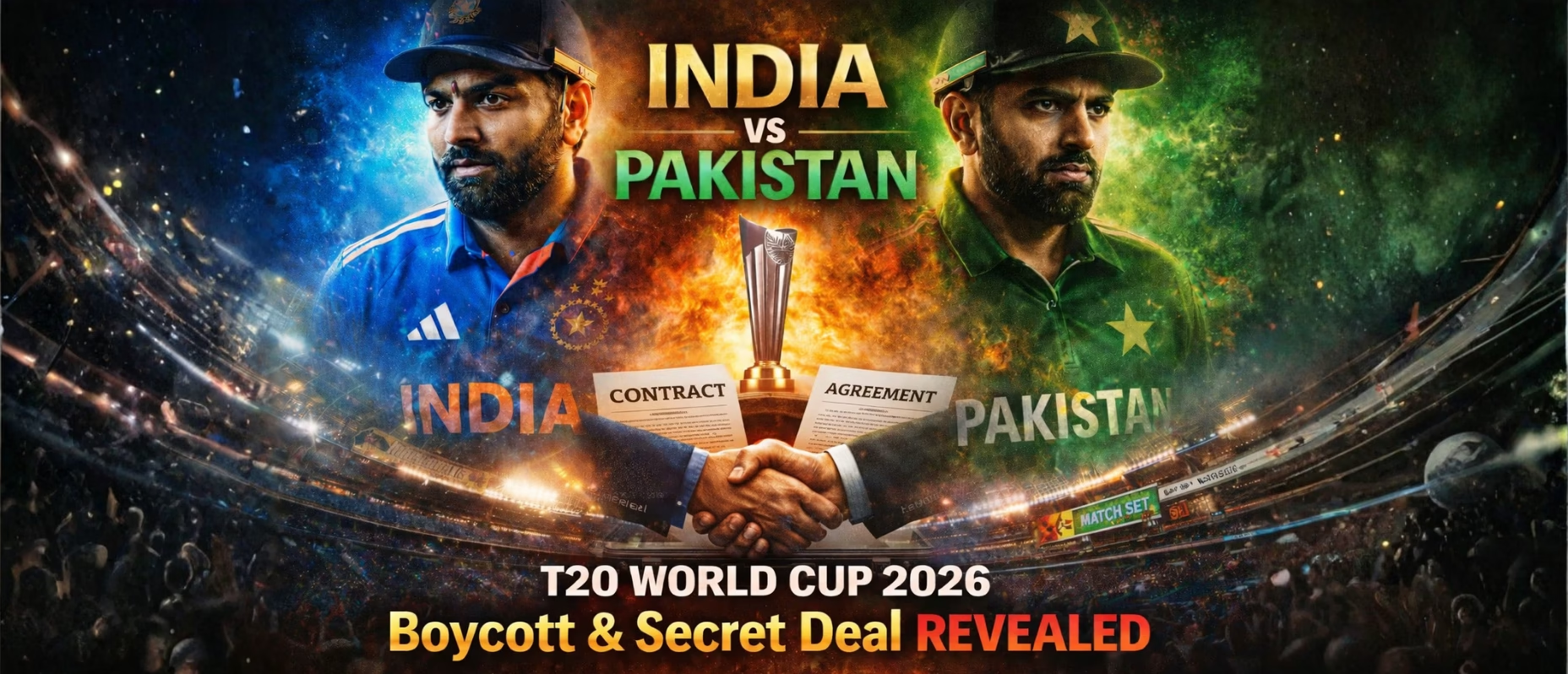
The India vs Pakistan T20 World Cup 2026 boycott has reached a dramatic conclusion, with the Pakistan government finally directing its team to take the field on February 15 in Colombo. The official narrative credits the “spirit of cricket,” our analysis suggests a complex web of pressure and diplomatic concessions. The standoff, which began after Bangladesh was replaced by Scotland due to their refusal to travel to India, threatened the tournament’s $4.4 billion broadcast valuation. Faced with the ICC’s refusal to invoke Force Majeure and a potential total suspension, the PCB was forced to find an “honorable exit” strategy. iCC, BCB and PCB met to discuss on this matter and attempt a cordial resolution. The meeting concluded earlier on 9th Feb, and ICC has issued a press note confirming the news of the India-Pakistan game to take place on the scheduled 15th Feb’26, and elaborated the agreements made.
Read: ICC Media Release After Its Meeting with BCB and PCB | ICC Confirming that India-Pakistan T20 World Cup 2026 Match Will Take Place
International Cricket Council (ICC) Statement
The ICC confirmed the match after a six-hour emergency meeting at the Gaddafi Stadium in Lahore. They notably confirmed a “lenient view” toward Bangladesh to secure Pakistan’s cooperation.
Key Quote: “It was agreed that all members will respect their commitments as per the terms of participation… it is agreed that no financial, sporting or administrative penalty will be imposed on Bangladesh Cricket Board (BCB) in relation to the current matter.”
The "Hidden" ICC-BCB-PCB Deal
While most major outlets are focusing on the match being “on,” the real story lies in the concessions granted to the Bangladesh Cricket Board (BCB).
No Punitive Action: In a rare move, the ICC confirmed that no financial or sporting penalties will be levied against Bangladesh for withdrawing from the India-leg of the tournament.
Future Hosting Rights: Bangladesh has been effectively “compensated” for their ouster with guaranteed hosting rights for a major ICC event between 2028 and 2031. The press note explicitly mentions that the BCB retains the right to approach the Dispute Resolution Committee (DRC).
The Hybrid Model Precedent: The PCB and BCB have reportedly pushed for a resolution that extends the “Hybrid Model” (playing India at neutral venues) until the 2031 World Cup, ensuring they won’t be forced to tour India for the next five years.
Pakistan Government Official Statement
The Government of Pakistan released a formal notification late on February 9, reversing the earlier boycott order. The statement was issued following a high-level briefing of Prime Minister Shehbaz Sharif by PCB Chairman Mohsin Naqvi.
“In view of the outcomes achieved in multilateral discussions, as well as the request of friendly countries, the Government of Pakistan hereby directs the Pakistan National Cricket Team to take the field on February 15, 2026, for its scheduled fixture in the ICC Men’s T20 World Cup.”
Source: Official Statement from the Prime Minister’s Office (via NDTV & Times of India).
Bangladesh Cricket Board (BCB) Statement
BCB President Aminul Islam Bulbul issued a press release from Dhaka after visiting Lahore for emergency meetings. His statement provided the “diplomatic bridge” Pakistan needed to step back from the boycott.
“Following my short visit to Pakistan yesterday and given the forthcoming outcomes of our discussions, I request Pakistan to play the ICC T20 World Cup game on 15 February against India for the benefit of the entire cricket ecosystem. Long may our brotherhood flourish.”
Source: Official BCB Press Release (via The Guardian & Indian Express).
The Role of "Friendly Nations"
The U-turn wasn’t just about cricket; it was a result of intense regional diplomacy.
Sri Lanka’s Intervention: Sri Lankan President Anura Kumara Dissanayake personally called PM Shehbaz Sharif, emphasizing how a boycott would financially cripple Sri Lanka (the co-host) and the Associate nations who rely on the ICC revenue pool.
Bangladesh’s Request: In a carefully choreographed move, BCB President Aminul Islam requested Pakistan to play “for the benefit of the entire cricket ecosystem.” This gave the Pakistan government the political cover to backtrack without looking like they were bowing to BCCI or ICC pressure.
What This Means For Future?
This incident sets a dangerous but necessary precedent. By allowing Bangladesh to withdraw without penalty and rewarding them with future hosting rights, the ICC has prioritized financial stability over strict adherence to participation agreements. For your readers, the “takeaway” is clear: the India-Pakistan rivalry is too big to fail, and the ICC will rewrite its own rulebook to ensure the cameras keep rolling.



Check out related news:



Learn more about EverythingCric →
